Discipline makes Daring possible.

Outsourcing Work

Outsourcing Work

I’ve had a lot of work on this last couple of weeks.   A fair chunk of it as a customer.

My bank is asking me to re-give them some information they have had for at least 11 years;  my pension manager has asked me to give them information about dependents – but won’t use that information to update anything they already have, so now I have call them to check that myself;  I’ve had to chase to get a replacement pair of boots delivered and I’ve had to walk my own ‘last mile’ to pick up a parcel that got to my doorstep, but not beyond.

Don’t get me wrong, I have no problem with do-it-yourself – where that makes my life easier.

We humans want agency.  We want to do things for ourselves.   What we don’t want is to get tangled up in the inefficient bureaucracy and busy-work that is clearly going in inside these major organisations.   Bureaucracy that’s happening because they’ve forgotten who they really serve.   The customer.

Do your own job guys, that’s what I pay you for.


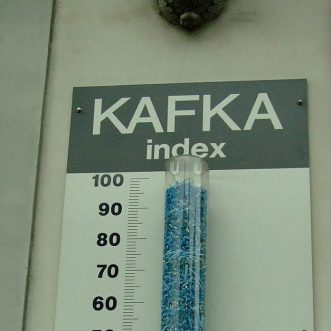
PS If you want to know more about bureaucracy in modern times, read this book.   Watch the author’s summary here.
Missing the point

Missing the point

The process is closely tracked:

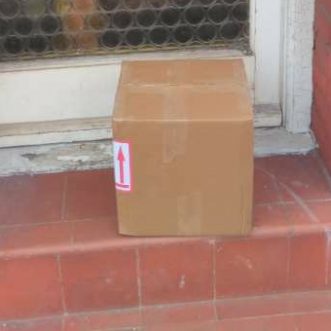
But for some reason its purpose fails and the parcel never makes it past my front door.

Even though I was on the other side of it waiting for delivery.

There was no knock.   Only the faint rustle of a blank ‘no delivery’ card pushed through the letterbox.  By the time I got there the van, and my parcel, had gone.

Later that evening my husband and I walked the mile and a half to the collection point to pick it up, because it was too heavy for me to carry on my own.  That was, in part, why I’d had it delivered.

This seems to be a growing feature of our modern lives.   Every low-paid, precarious service job is surveilled and tracked to within an inch of its life, and at the same time compressed into an ever shorter timeframe, until the point becomes to satisfy the tracking system – even if that means dissatisfying the customer.

This misses the point, big time.   The purpose of process is to support human beings to be better humans.  To remove the need to remember the things we’re good at forgetting, so we can concentrate on doing the things we’re good at doing  – like focussing on the customer as another human being.   But of course, that can only happen by acknowledging that the delivery person is a human being too, not a poor substitute for a robot, who you don’t know, don’t care about, don’t think is worth decent pay, and who therefore won’t be in the job long, so can’t be trusted to do the job properly.

So in the race to the bottom, what we end up with is process as a means to consistently and efficiently deliver bad service.

We really have missed the point haven’t we?