January 1, 2019
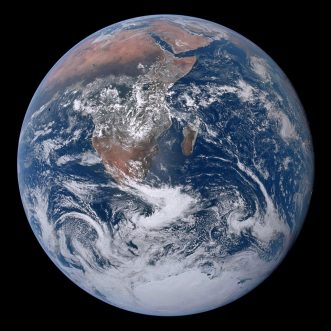
It’s become a bit of an annual tradition in our house to watch ‘Earth Story’ from beginning to end between Christmas and New Year.
And every year, I find myself thinking about why I enjoy watching it so much.
I love the fact that many of the scientists involved including the presenter, Aubrey Manning, are middle-aged or old. There is wisdom here as well as adventure. Many of these ‘old’ scientists made these exciting discoveries in their youth, and now younger people are following on.
I love that they collaborate so much across the world, feeding off and building on each others’ discoveries (sometimes by accident) to build an incredibly comprehensive picture of how the earth works.
I love that the topic is huge and complex, and that the documentary brings everything together in a way that takes you through the various discoveries and processes involved, until you too say to yourself “So that’s how it works”.
I love that it is a clear, straightforward, scientific, scholarly presentation. There’s no faux jeopardy, no contrived drama, no patronising. The subject is wondrous and dramatic enough to stand on its own. There’s no agenda other than to educate.
And at the end of the 8 hours, I sit back every time and think 3 things:
First, Earth is an amazing place. It’s been going a lot longer than we have, and it will happily carry on for a long while without us.
Second, people are amazing. Look at what we can do – not just the thinking and hypothesising, but the technology that allows us to observe and prove our hypotheses.
Third, there’s nothing we can do about how the planet works. The status quo will not hold forever. Whether we are speeding it up or not, the planet is going to get hotter or colder and cause us enormous difficulties.
So if we want our human story to be part of the earth story for a little longer, the answer has to lie in changing the things we can change – our societies, our priorities, our ways of living together, our ways of living on the planet – we made all these things, we can remake them.
Perhaps we could practise on smaller problems first – hunger, poverty, exploitation, how to enable anyone and everyone to live well, wherever on earth they happen to be?
Here’s to 2019.